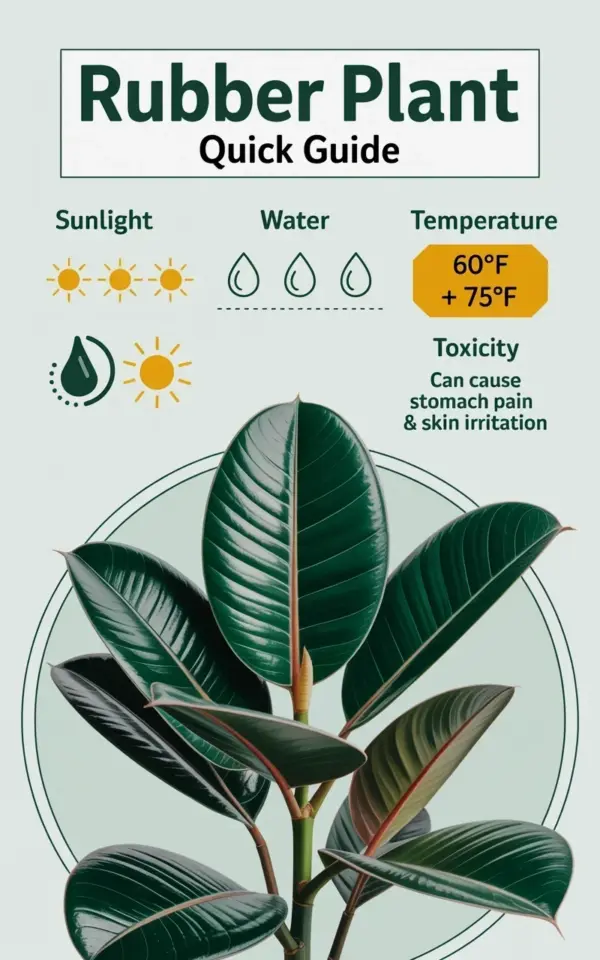
Look, I get it. You’ve probably killed a rubber plant or two, or you’re staring at one right now wondering if those droopy leaves mean “too much water” or “not enough light.” This is exactly why that rubber plant infographic with its four sun icons and three water drops has been saving people’s plant-parent sanity. That clean little visual guide breaks down the Ficus elastica care routine into something you can actually remember, no 20-page guide required. And honestly, the rubber plant quick guide format works because it skips the fluff and gets straight to what your plant needs to thrive.
## Sunlight Needs For A Thriving Ficus Elastica
That infographic with its four sun icons is telling you something important: rubber plants are greedy when it comes to light. Not in a harsh, scorching way, but they genuinely want as much bright, indirect sunlight as you can throw at them. Think of a spot near an east-facing window or a few feet back from a south-facing one. You want the plant to see the sky clearly but never feel direct sun on its leaves for more than a couple of hours.
Here’s the thing about rubber plants and light: they’re surprisingly adaptable, but they show their true colors when they’re happy. Give it medium light and it’ll survive, sure, but the new growth will come in leggy and the leaves will lose that deep, glossy shine. Give it that bright, filtered light and the new leaves will emerge with that reddish casing before unfurling into dark, leathery perfection. It’s actually really satisfying to watch when you get it right.
## Watering Your Rubber Plant Like The Infographic Shows
Ok so about those three water drops in the infographic. That’s telling you to water roughly once a week, but honestly, it’s more about checking the soil than counting days. Shove your finger about an inch or two into the potting mix. If it feels dry, water it thoroughly until it runs out the drainage holes. If it feels slightly damp, walk away and check again in a couple of days. That’s the whole trick.
What the infographic doesn’t show you is what happens when you get this wrong, so let me tell you. Overwatering is the number one rubber plant killer, bar none. The leaves will turn yellow and droop, and the stem might get mushy at the base. Underwatering, on the other hand, gives you leaves that get brown and crispy at the edges, and the plant might drop its lower leaves entirely. Both are recoverable, but why put your plant through the drama.
– Check soil moisture with your finger before watering, every single time
– Water thoroughly until water drains out the bottom, but never let it sit in standing water
– Reduce watering in winter when growth slows down naturally
– Use room temperature water, cold water can shock the roots
## Temperature Range That Keeps Rubber Plants Happy
That 60°F to 75°F range in the infographic isn’t just a random number, it’s basically your plant’s comfort zone. Rubber plants are tropical natives, and they hate cold drafts more than anything. Keep them away from drafty windows in winter, air conditioning vents in summer, and definitely don’t put them near a doorway where cold air rushes in every time someone enters. They’ll drop leaves just to spite you.
Here’s a weird little detail I noticed from my own collection: rubber plants actually appreciate a slight temperature drop at night. It mimics their natural habitat and can encourage stronger growth. So don’t panic if your house dips a few degrees in the evening. As long as you’re staying in that 60 to 75 sweet spot for most of the time, your plant won’t complain. And if your house runs warmer than 75, that’s fine too, just increase humidity and make sure the soil doesn’t dry out too fast.
## Toxicity Warning: What The Green Text Is Really Telling You
The infographic’s green text about stomach pain and skin irritation is not there to scare you, it’s there because this plant can genuinely make you miserable. The sap inside rubber plant leaves and stems contains latex and other compounds that are toxic to humans and pets. If a curious cat chews on a leaf, you might end up with a vomiting pet and a hefty vet bill. If you’re pruning it and get sap on your skin, you might get a nasty rash that itches for days.
I learned this one the hard way, honestly. I was pruning my big rubber plant without gloves, and about twenty minutes later my forearms were covered in red, itchy welts. Not a fun afternoon. So now I always keep a pair of disposable gloves near my pruning shears, and I wipe the cut stems with a paper towel to stop the sap from bleeding everywhere. It’s a small hassle that saves you from a lot of discomfort.
## How The Infographic Combines Sunlight Water And Temperature Together
What I actually love about the rubber plant infographic is how it shows all the main care factors in one single view. It’s not giving you an entire encyclopedia, it’s giving you the cheat sheet you can glance at while doing your weekly plant check. Sunlight, water, temperature, and toxicity, all right there. It turns plant care from a guessing game into a simple checklist.
Look, you can read twenty different care guides and still feel confused. That’s normal. Every house is different, every light condition is different, and every watering schedule varies based on your soil, your pot, and your climate. But that infographic gives you a solid baseline to work from. Start with those four sun icons, those three water drops, and that temperature range, then adjust based on how your plant responds.
The infographic also works because it feels approachable. A wall of text about soil amendments and pest management is overwhelming when you just want to know if your plant is okay. But seeing four sun icons instantly communicates “this thing loves light” better than a whole paragraph ever could. That’s why I think visual plant guides are genuinely underrated.
## Practical Tips For Using This Care Guide
If you really want to nail rubber plant care, print that infographic out or save it on your phone. Put it next to your plant if you can. When you’re doing your weekly check, look at the sun icons and ask yourself if your plant is actually getting that much light. Look at the water drops and stick your finger in the soil. Run through the temperature range mentally and make sure your AC or heater isn’t blasting directly on the leaves.
And here’s the bonus tip that nobody puts on infographics: rotate your rubber plant a quarter turn every time you water. It grows toward the light, so rotating it keeps the shape full and balanced instead of creating a weird lean that makes the whole plant look drunk. Combine that with regularly dusting the leaves so they can actually photosynthesize efficiently, and you’re basically a professional rubber plant caretaker.
So yes, save that infographic, follow its little icons, and give your Ficus elastica what it actually wants. Your plant will reward you with fast growth, huge glossy leaves, and maybe even a new leaf or two that unfurl in that gorgeous reddish color. And when your friends ask how you got your rubber plant to look so good, you can tell them it was just a matter of paying attention to the basics. That’s it. That’s the whole secret, just show up consistently and don’t overcomplicate things.
Leave a Comment