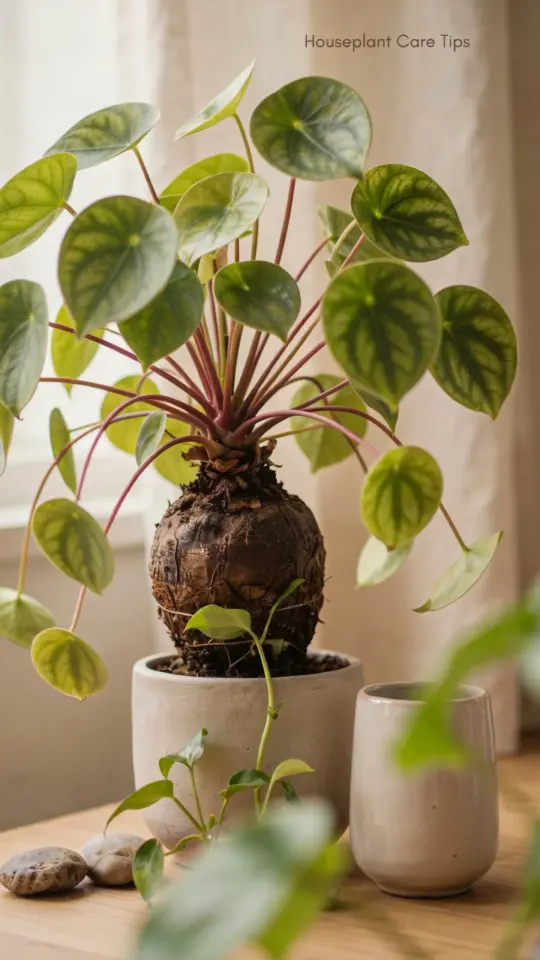
Overwatering Your Stephania Erecta (Yes, It Really Happens)
You would think a plant called a caudex succulent would be safe from overwatering, but this is the number one mistake I see with red rattan owners. The bulb stores water, so the plant actually needs less than most houseplants. People see the soil look dry and panic, then drown the roots. I have done it myself. That bulb can rot in days if the potting mix stays wet. Wait until the soil is completely dry, then give it a small drink. For safety, use a pot with drainage holes and avoid letting water sit in the saucer.
Putting Your Red Rattan in Direct Sunlight
Many assume a desert looking plant wants full sun. Not true. Stephania erecta thrives in bright indirect light, but direct sunlight will scorch its leaves fast. I learned this the hard way when my plant got crispy brown patches after just one afternoon on a south facing windowsill. East or north windows work well, or a spot a few feet back from a west window. If the leaves start looking pale or faded, move it to a shadier spot. If they stretch out and look leggy, it needs more light. Simple adjustments fix both problems.
Choosing the Wrong Pot for the Caudex Bulb
A deep, narrow pot seems logical for a plant with a big bulb, but that traps moisture around the roots. I prefer a wide, shallow container that lets the bulb sit on top of the soil, not buried. The bulb needs to breathe. If you bury it completely, you risk rot and weird growth. Look for a pot that is 2 to 3 inches wider than the bulb, with plenty of drainage. Terracotta is great because it helps wick away extra moisture. Plastic pots can work but only if you water very sparingly.
Ignoring the Dormancy Period (Most People Do)
Here is where lazy plant parents get confused. Your red rattan will go dormant in winter or when conditions change. The leaves fall off, the bulb looks dead, and people panic and water more. That is the fastest way to kill it. Dormancy is normal. Stop watering completely when the leaves yellow and drop. Keep the bulb in a cool, dry spot with low light until spring. Even if it looks like a shriveled rock, do not water. I have had bulbs stay bare for months and then suddenly sprout new vines. Trust the process.
Using the Wrong Soil Mix for Stephania Erecta
Regular potting soil is way too heavy for this plant. It holds water and suffocates the roots. You need a gritty, fast draining mix. I use two parts cactus soil, one part perlite, and one part orchid bark. That keeps the bulb dry and allows air to circulate. Some people add pumice or coarse sand. The goal is for water to flow through quickly, not sit around. If your soil stays damp for more than a week after watering, repot with a better mix. Your red rattan will thank you with stronger growth.
- Use a pot with drainage holes every time.
- Never water on a schedule. Check the soil with your finger.
- Let the bulb sit above the soil line, not buried.
- Stop watering completely during winter dormancy.
- Give it bright indirect light, not direct sun.
Forgetting About Air Circulation Around the Bulb
Stagnant air around the caudex can lead to mold or slow growth. I keep my red rattan in a spot with gentle airflow, like near an open window or a ceiling fan on low. Do not put it in a drafty spot, but a little moving air helps the bulb stay dry and healthy. If you notice dust or fuzzy spots on the bulb, wipe it gently with a dry cloth and improve the ventilation. This is one of those small details that makes a big difference over time.
Not Pruning or Training the Vines
Stephania erecta grows long, twining vines that can look messy if ignored. Some people let them run wild, which is fine, but if you want a compact plant, you need to prune. Use clean scissors to cut back leggy stems in spring before new growth kicks in. You can also train the vines up a small trellis
#stephaniaerecta #redrattan #houseplantcare #lowmaintenance #indoorplants
Leave a Comment