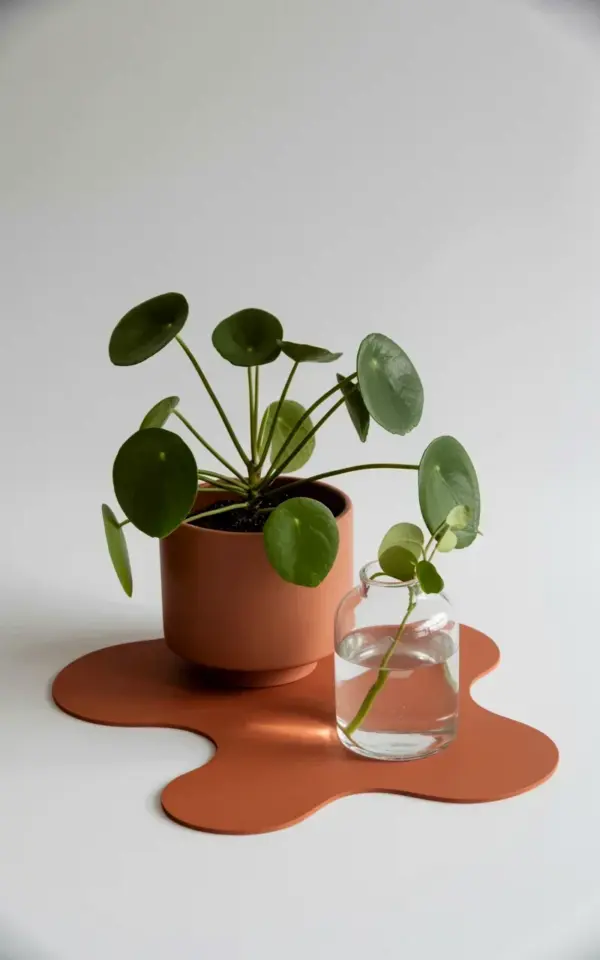
There is something about a Pilea peperomioides on a curved terracotta plant stand that just hits different. Honestly, I cannot stop staring at the one in the photo on my desktop. It has those round, dark green leaves arranged in a perfect rosette, sitting in a terracotta-colored ceramic pot. And the base? It curves in this abstract, flowing shape that makes the whole setup feel like a tiny sculpture. Not gonna lie, I want this exact look for my own living room. But here is the thing: replicating that cozy, curated vibe is easier than you think. You just need the right pieces and a bit of intention.
The quiet power of matching tones
There is something deeply satisfying about a monochromatic palette. The terracotta pot, the curved base, even the subtle orange undertones in the room light. They all work together. I usually hate matchy-matchy decor, but this is different. It feels intentional rather than forced.
The Pilea deep green leaves pop against those warm earth tones. That contrast is what makes it so visually calming. If you are building a minimalist indoor garden, start with one consistent color for your containers. Terracotta is a solid choice. It grounds the space. The plain white background in the photo only helps the warm tones stand out more. Honestly, that clean backdrop is half the magic.
Here is a weird aside: I once spent an entire afternoon painting mismatched pots to get them to the same shade of rust orange. Did it work? Kind of. But buying a matching set from the start would have saved me a headache. So learn from my mistake. Go for cohesion from day one.
Why a propagation jar belongs next to your Pilea
Look, I am a sucker for a good propagation jar. The clear glass vase in the photo holding a single leaf cutting in water is not just decorative. It tells a story. It shows that this plant is growing, evolving. It adds a layer of transparency and lightness to an otherwise solid earthy setup.
A propagation jar is a small thing. But it makes a big difference. I have one on my windowsill right now with a single baby leaf. It took three months to root. Three months! That waiting period made me appreciate it so much more. Not gonna lie, the cutting in water also serves as a practical reminder to check on your main plant. When you see the roots growing, you remember to water the mother plant too.
So if you want that curated look, add a propagation jar. It completes the story. It gives the whole arrangement a sense of purpose and growth.
Choosing a plant stand that does the heavy lifting
The curved terracotta base in the photo is not just a stand. It is a statement. It lifts the pot off the surface, gives it breathing room, and adds a sculptural element. I have seen a lot of plant stands in my time. Wooden ones, metal ones, plastic ones. Most of them are boring. But a flowing, curved shape like this? That is memorable.
When choosing a plant stand, think about how it interacts with the pot. Does it complement the shape? Does it create negative space? Or does it just sit there being a stand? The best ones do more. They become part of the artwork. In the photo, the base forms an abstract flowing shape that echoes the roundness of the Pilea leaves. That kind of visual harmony is rare. If you can find something similar, grab it.
And honestly, a curved stand has another benefit. It feels softer. It invites touch. A straight metal stand can feel cold and sharp. A curved terracotta one feels welcoming.
Styling a Pilea peperomioides for cozy indoor vibes
Alright, let us talk about the star of the show. The Pilea peperomioides, or Chinese money plant, has earned its spot in my home for a reason. Its round leaves are cheerful and simple. It grows in a tidy rosette, which makes it look like a little green umbrella. Not gonna lie, I have
#indoorplants #pileapeperomioides #plantstand #terracottadecor #propagationjar
Leave a Comment