Why Monstera deliciosa needs support (and the cheap way to do it)
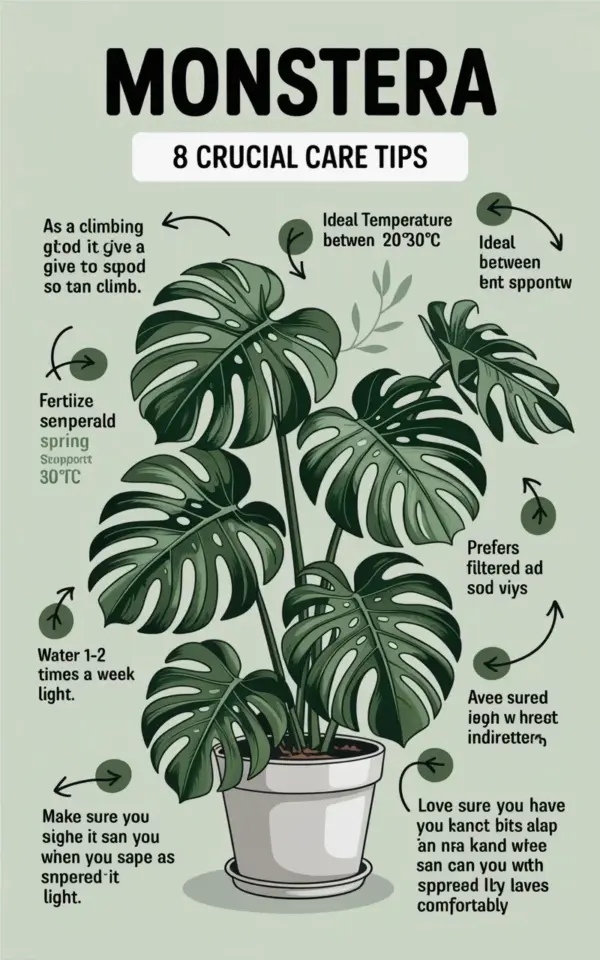
I used to think my Monstera deliciosa plant care guide was just about watering and forgetting. Then the leaves stayed small and plain. No slits, no character. The infographic I saved (you know the one with the sage green background and white ceramic pot) reminded me that this is a climbing plant. In the wild, it grows up trees. Without a support, the leaves stay juvenile. But you do not need an expensive moss pole. A simple bamboo stake or a wooden dowel wrapped in coconut coir works just as well. I bought a three-pack of stakes for under five dollars. Tie the main stem loosely with soft twine (old shoelaces work too) and watch the aerial roots grab on. Give it something to climb, and the split leaves follow.
Getting those big split leaves without expensive fertilizers
Fenestrations (the fancy name for those slits and holes) happen when the plant gets enough light and maturity. But you can speed things up without buying special plant food. I use a cheap balanced fertilizer (10-10-10) diluted to half strength every other watering during spring and summer. That costs maybe three dollars for a bottle that lasts a year. The real trick is patience and consistency. If your Monstera is pushing out leaves that are still solid, check the light first (more on that below). Also, do not be afraid to gently wipe the leaves with a damp cloth. Dust blocks sunlight, and your plant needs all the energy it can get to create those iconic splits.
Watering without killing your plant (yes, it’s tricky)
Overwatering is the number one mistake I see in Monstera deliciosa care guides. The roots rot fast when they sit in wet soil. I water mine only when the top two inches of soil feel dry. Stick your finger in – it is free and more accurate than any moisture meter. In winter, that might mean once every two weeks. In summer, once a week. Use room temperature tap water that has sat out overnight to let chlorine evaporate. Or collect rainwater if you are extra dedicated. Just do not follow a rigid schedule. Your home’s humidity and temperature change everything. A droopy, yellowing leaf usually means too much water, not too little.
Light requirements that won’t break your bank
You do not need grow lights or a south-facing window to get a happy Monstera. Bright indirect light is best. That means a spot where you can read a book comfortably during the day, but the sun never hits the leaves directly. Direct sun burns the leaves and turns them pale. I keep mine a few feet back from an east window. If you only have a dark corner, a cheap LED bulb in a desk lamp works fine. Just put it six inches away and leave it on for 10-12 hours. No need for fancy plant bulbs. Regular daylight LED bulbs (5000K) do the job for under ten dollars. Rotate the pot a quarter turn every week so all sides get light. That keeps the plant growing evenly and prevents lopsided stems.
Fixing yellow leaves and other common problems
Yellow leaves freak everyone out. But they are usually a simple fix. If the leaf is uniformly yellow and mushy, you are overwatering. Let the soil dry out completely before the next watering. If the leaf is yellow with brown edges, the air is too dry. Group your plants together or place a bowl of water nearby to add humidity. Small brown spots could mean sunburn or fertilizer burn. Flush the pot with water to remove excess salts. And if the plant stops growing altogether, check the roots. Sometimes they get pot-bound. That leads us to the next budget-friendly tip.
- Yellow, mushy leaves – ease up on watering, let soil dry between drinks.
- Brown crispy edges – increase humidity with a pebble tray or humidifier (a damp towel over a rack works too).
- Small or no split leaves – give it more indirect light and a support to climb.
- Drooping stems – check if the soil is too dry or if the pot is too small.
- Pests like spider mites – wipe leaves with soapy water (dish soap and water, cheap and effective).
Soil and repotting on a shoestring
Monsteras like chunky, well-draining soil. But you do not have to buy a premium aroid mix. Mix regular potting soil with perlite and orchid bark in equal parts. I use the cheapest bag of potting soil from the hardware store (three dollars), a bag of perlite (four dollars), and a small bag of orchid bark (six dollars). That makes enough soil for three repots. Repot only when roots start coming out the bottom drainage holes. Usually every 12-18 months. Choose a pot just one to two inches larger in diameter. A plain terracotta pot from the dollar store works perfectly and helps prevent overwatering by wicking moisture away. Do not repot just because you want a bigger pot – stress slows leaf growth.
Eight care tips summary (exactly like the infographic)
Remember that infographic with the white pots and the circular arrows? The eight tips written in white text on a sage green background really are the core of Monstera success. Here is the list that matches it:
- Give it a climbing support so it grows upright and develops larger leaves.
- Water only when the top two inches of soil are dry.
- Provide bright indirect light – no direct sun.
- Wipe leaves monthly to remove dust and improve photosynthesis.
- Fertilize lightly every 2-4 weeks during spring and summer.
- Repot every 12-18 months with a chunky, well-draining mix.
- Increase humidity if leaf edges turn brown.
- Rotate the pot weekly for even growth.
Follow those eight and your Monstera will reward you with huge, split leaves that make the whole room look alive. No special gadgets, no pricey tools. Just consistent care and a little patience.
Save this for your indoor jungle journey
I wish I had found this simple, budget-friendly approach years ago. My Monstera went from a sad, three-leaf thing to a sprawling beauty with leaves bigger than my face. And it cost me less than twenty dollars in supplies. The key is not doing everything perfectly at once. Pick one tip this week (maybe the support or the watering check) and build from there. Your plant will respond faster than you expect. Bookmark this guide for later, and do not be shy about sharing your before and after photos. The indoor jungle community loves real progress, not perfection. Now go give your Monstera some love.
#MonsteraCare #PlantCareGuide #IndoorPlants #MonsteraDeliciosa #HouseplantTips
Leave a Comment