How to Make a Snake Plant Bloom on a Budget (Yes, It’s Possible!)
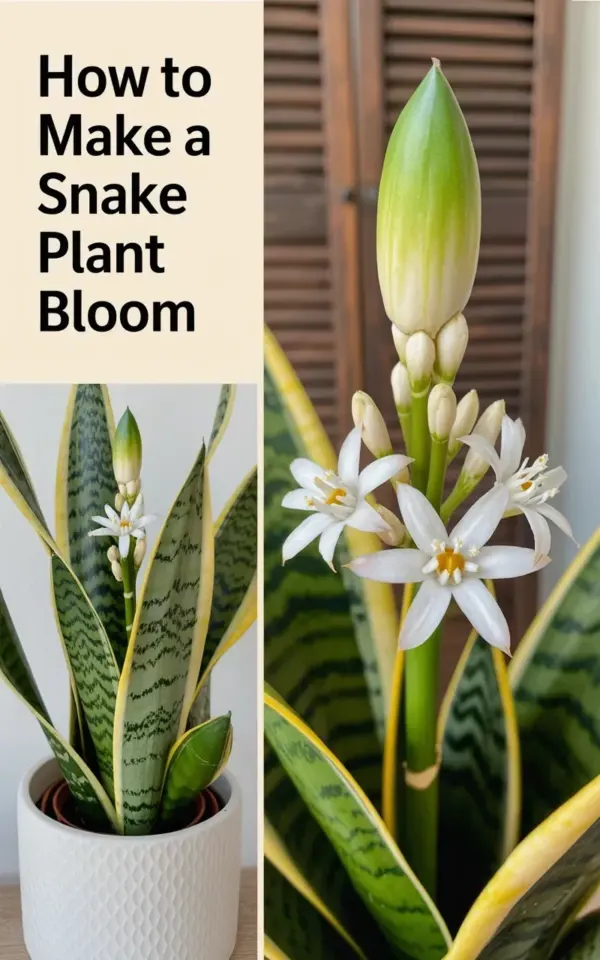
I never expected my snake plant to flower. After years of seeing it as a tough, low-maintenance leaf machine, I was genuinely shocked when tiny white star-shaped blossoms appeared one spring. The split-screen image you might have seen shows exactly what happened: black text on a cream background reads “How to Make a Snake Plant Bloom” on the left, while two close-up photos on the right capture a snake plant with variegated green and yellow leaves in a white textured ceramic pot, small white flowers emerging from the center. The detail photo reveals a macro view of the same bloom. That moment cost me nothing extra, and it taught me that getting a snake plant bloom is less about fancy products and more about understanding what the plant actually wants.
Why Most Snake Plants Never Flower (And Why That Is Fine)
Sansevieria, commonly called snake plant or mother in law’s tongue, is famous for being nearly indestructible. Most people keep them in dim corners or forget to water them for months, and they still look fine. But that same tolerance often prevents blooming. Snake plants flower only when they feel secure and slightly stressed in the right ways. If you treat yours like a low-light houseplant that never gets moved, it will likely stay green and bloom-free for years. That is not a failure. It is just how they live in many homes.
Knowing that flowering happens under specific conditions, you can decide whether to try for blooms or keep enjoying the handsome foliage. Either choice works. This guide is for those who want to give it a shot without spending money on special fertilizers or grow lights.
The Secret Ingredient: Bright Indirect Light (Zero Cost)
Light is the single most important factor for triggering a snake plant bloom. These plants are succulent-like and store water in their thick leaves, but they need more light than most people assume. A spot near an east or south facing window, with a sheer curtain or a few feet of distance to prevent scorching, provides the bright indirect light that encourages flowering.
I moved my snake plant from a low shelf to a table about three feet from a south window. Within two months, the leaves seemed thicker and a tall flower stalk started emerging from the center. No lamp, no special setup. Just free sunlight. If you do not have a sunny window, consider rotating the plant weekly so all sides get equal exposure. This is the cheapest bloom booster available.
The Power of Neglect: Less Water, More Blooms
Overwatering is the fastest way to kill a snake plant and the quickest way to prevent blooms. These plants evolved in arid regions of West Africa, so they respond to periods of dryness. When you water too frequently, the roots stay wet and the plant focuses on survival rather than reproduction.
Let the soil dry out completely between waterings. In winter, that might mean watering once a month or even less. In summer, once every two to three weeks is enough. The slight drought stress signals to the plant that conditions are stable and it can afford to produce a flower stalk. This costs you nothing but a little patience. My snake plant bloomed after I deliberately held back water for five weeks during a dry spring. The flower spike emerged right after that dry spell.
Root Bound = Happy Blooms? What You Need to Know
Snake plants often bloom when they are slightly root bound. A cramped pot makes the plant feel crowded, which can trigger flowering as a final effort to reproduce before the space runs out. That might sound counterintuitive, but it works.
If your snake plant has been in the same container for several years and roots are visible through the drainage holes, do not repot it immediately. Instead, leave it alone. I keep my blooming snake plant in a plastic nursery pot inside a decorative ceramic cachepot. It has not been repotted in over four years. The roots are tightly packed, and that seems to encourage the plant to send up a flower stalk. When you repot too often into large containers, the plant puts energy into root growth instead of blooms.
No Special Fertilizer Needed: What Actually Works
Fertilizer can help, but you do not need expensive liquid formulas. Snake plants are light feeders. Too much nitrogen encourages leafy growth at the expense of flowers. If you want a cheap option, use a balanced houseplant fertilizer diluted to half strength once during the growing season, usually in early spring. Or skip fertilizer entirely and rely on organic matter in the soil.
I have never used store bought fertilizer on my snake plant. Instead, I top dress the pot with a thin layer of worm castings every two years. That provides slow release nutrients without overstimulating foliage growth. Another zero cost trick: water your snake plant with water cooled from boiling potatoes or rice. Just make sure it is unsalted. Those starchy liquids contain trace minerals that plants appreciate.
Patience and Timing: When to Expect Flowers
Even with perfect care, a snake plant bloom does not happen overnight. Most snake plants need to be several years old before they flower. Young plants simply do not have the energy reserves. Expect to wait at least three to five years if you start with a small pot.
Blooms usually appear in late spring or early summer, triggered by longer days and warmer temperatures. The flower stalk grows quickly, sometimes rising a foot or more above the leaves. The small white blossoms are fragrant, especially in the evening, with a scent similar to jasmine or lilies. The bloom period lasts for a few weeks. After the flowers fade, cut the stalk down to the base. The plant will go back to growing leaves, and it may bloom again the following year or two.
A Simple Care Routine That Encourages Blooming
If you want to stack the odds in your favor without spending a dime, follow this short checklist. It covers everything you need to do and not do.
- Place the plant in bright indirect light near a window.
- Water only when the soil is completely dry, about once every three to four weeks.
- Keep the plant in the same pot for several years to encourage root binding.
- Avoid fertilizing more than once per year, and use a mild balanced option or none at all.
- Mist the leaves occasionally to increase humidity, though this is optional.
- Do not move the plant around a lot. Consistent conditions help.
- Be patient. Older plants are more likely to bloom, so wait at least three years.
Conclusion: Let Your Snake Plant Do Its Thing
Making a snake plant bloom on a budget is really just about stepping back and giving it the conditions it evolved for: good light, sparse water, and a little confinement. You do not need a greenhouse or expensive products. I spent exactly nothing to get those white star shaped flowers, and the fragrance at dusk made it feel like a small miracle. Try these tweaks and see what your snake plant decides to do. If you get a bloom, share a photo. If not, you still have a healthy, happy plant that asks very little of you. That is worth keeping either way.
#snakeplant #plantbloom #houseplanttips #budgetgardening #indoorplants
Leave a Comment