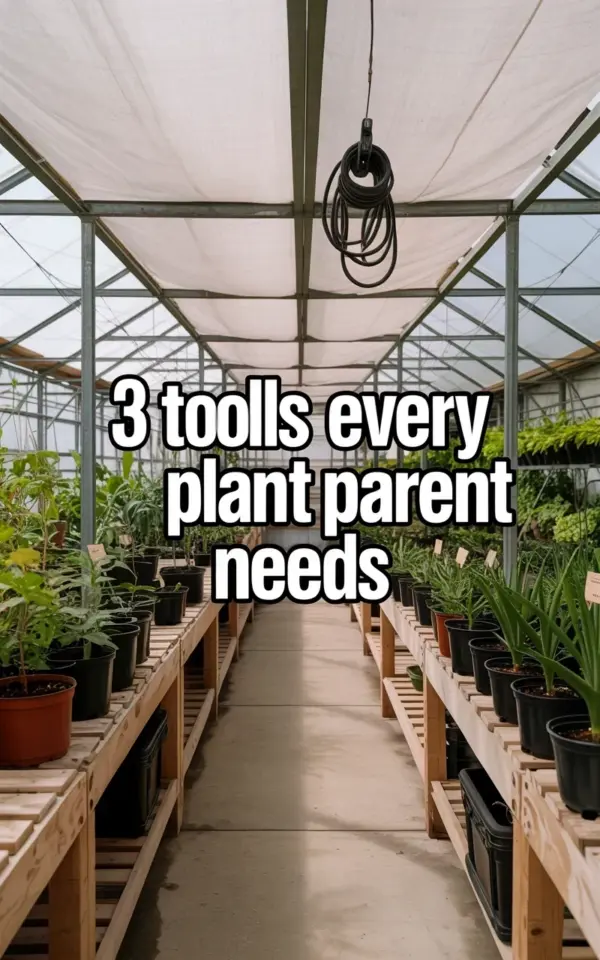
I snapped that photo on a quiet Saturday morning in my greenhouse. If you look closely, you will see the concrete walkway, the light wooden shelving units on both sides, and the white translucent fabric ceiling overhead. A black electrical cord hangs down from the metal support beam, and every plant on those shelves is thriving because of three specific tools. I have tested more gadgets than I care to admit, but these houseplant care tools are the only ones that make it into my hands on a weekly basis. They simplify watering, pruning, and repotting without any fuss, and they will do the same for your indoor jungle.
Why Your Tool Kit Matters More Than You Think
When I first filled my greenhouse, I grabbed random kitchen spoons, old spray bottles, and a rusty pair of scissors. It was a mess. Roots got damaged, stems got crushed, and I spent way too long cleaning up after every single watering. Once I switched to proper gear, my plants started responding visibly. The leaves perked up, the soil stayed aerated, and I actually looked forward to maintenance. Your choice of tool is not about aesthetics. It is about how you interact with each plant. A good tool prevents stress on both you and your foliage, and that makes all the difference in a room full of green life.
If you are serious about growing a healthy indoor garden, you need no more than three items to cover 90 percent of your daily tasks. Here are my picks, born from real trial and error on that concrete walkway.
Essential Tool #1: The Watering Can for Your Indoor Jungle
Watering sounds simple, but improper delivery is the number one killer of houseplants. My go can is a narrow-spout metal watering can that holds exactly two quarts. The spout is long and thin, which lets me reach between leaves without dumping water on crowns or splashing soil everywhere. I fill it at my utility sink, carry it down the concrete walkway in my greenhouse, and pour directly into each pot. No runoff, no mess, no guesswork.
Look for a can with a detachable rose head. Use the head for delicate seedlings or for rinsing dust off foliage. Remove it for precise soil drenching. Avoid plastic cans with wide spouts. They dump water too fast and disturb the root zone. A simple metal can will last you years and make watering the most pleasant part of your day.
Essential Tool #2: Pruning Shears That Keep Your Greenhouse Plants Happy
Pruning is the single best way to encourage bushier growth and remove dead matter. I use a pair of bypass pruners with sharp stainless steel blades. They cut cleanly without crushing stems, which reduces the risk of disease. I keep them on the top wooden shelf, right next to my propagation station. Every time I walk by, I snip off a yellowing leaf or a leggy stem. It takes ten seconds, and the plant bounces back within a week.
Here is what I look for in a greenhouse pruning tool:
- Bypass blades (the two blades slide past each other) instead of anvil blades, which tend to crush softer stems.
- Ergonomic handles with a spring-loaded action to reduce hand fatigue during longer sessions.
- Locking mechanism so you do not accidentally cut yourself when reaching into the back of a shelf.
- Replaceable blades so you can sharpen or swap them instead of buying a new tool every year.
Do not overthink it. A decent pair costs around twenty to thirty dollars and will outlast most of your plants if you clean them after each use. A quick wipe with rubbing alcohol keeps them sterile and ready for the next trim.
Essential Tool #3: The Repotting Scoop and Trowel Set for Plant Parents
Repotting used to be a messy ordeal until I found a small stainless steel scoop and a narrow trowel. The scoop is perfect for filling pots without spilling soil on the concrete floor. The trowel has measurement markings along the blade, which helps me gauge depth when transplanting. I also use a wooden chopstick for aerating soil between waterings, but that is a bonus item, not an essential.
When you are a plant parent who repots several plants in a single afternoon, you want tools that fit comfortably in your hand and do not rust. I store them in a small terracotta pot near the sink. That way I always know exactly where they are. No more digging through drawers under the wooden shelving while dirt gets all over the fabric ceiling curtains.
How I Organize These Plant Essentials in My Greenhouse
Organization is the secret to actually using your tools. I keep a small wooden crate on the lowest shelf of my light-colored wooden units. In that crate I store the watering can spout head, the pruning shears, the scoop, and the trowel. A little hook on the metal beam holds the watering can itself, so it does not sit on the concrete walkway and collect dust. The black electrical cord you see in the photo is attached to my grow lights, and I made sure the tools are stored away from any dangling cords to avoid accidents.
Every Sunday evening I spend five minutes wiping down the shears and rinsing the scoop. It takes almost no effort and keeps everything ready for the week ahead. If you have a similar setup with wooden shelves and a fabric ceiling, protect your tools from humidity by drying them before putting them away. Moisture is the enemy of metal, even stainless steel.
Maintenance Tips to Make Your Tools Last Longer
Do not treat your tools like disposable objects. A little care goes a long way. After each use, wipe the blades of your pruning shears with a dry cloth. Once a month, oil the pivot point with a drop of mineral oil. For the watering can, rinse it out and let it dry upside down to prevent mineral buildup on the spout. The scoop and trowel should be washed with mild soap and water, then dried thoroughly.
I cannot stress this enough: dull tools damage plant tissue. Keep your shears sharp by running a fine-grit sharpening stone across the beveled edge every few months. A clean, sharp cut heals faster than a ragged tear. Your plants will repay you with stronger growth and fewer pest problems.
Building Your Own Houseplant Care Toolkit
You do not need a greenhouse with a fabric ceiling and concrete walkway to benefit from these three tools. A sunny apartment window or a corner of your living room works just as well. Start with the watering can, then add the pruning shears and the repotting set as you expand your collection. Stick with quality materials, avoid plastic when possible, and always store them in a place that is easy to reach.
I have watched my own indoor jungle transform from a collection of sad, forgotten plants into a thriving mess of green because I stopped improvising and started using the right gear. Give these essentials a try. Your plants will thank you, and you will wonder how you ever managed without them.
#houseplantcare #plantparent #greenhouseplants #indoorjungle #plantessentials
Leave a Comment