My Honest Take on Growing Plants in a Darker Home
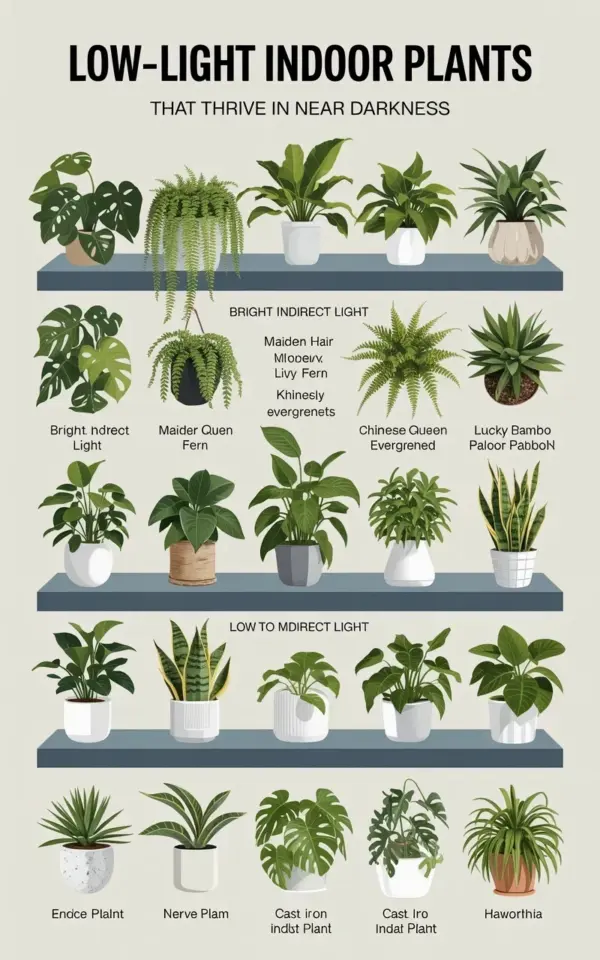
Let me guess. You have that one corner in your living room where the sun never reaches. Or maybe you live in a basement apartment with small windows that barely let in light. I have been there. For years I thought I could never keep houseplants alive because my space was too dim. Then I discovered that low light indoor plants are actually a real thing, not just a myth sold by garden centers. The infographic above shows exactly 18 plants that survive and even grow in near darkness. Those three floating shelves with the white ceramic pots? That is a realistic setup for anyone who wants greenery without chasing sunlight around the house.
The trick is matching the plant to the exact light level. Notice how the shelves in the chart are labeled: “Bright Indirect Light,” “Low to Bright Indirect Light,” and “Low to Medium Indirect Light.” That third shelf is where most of us with dim homes need to focus. I saved that infographic on my phone before my last plant shopping trip, and it saved me from buying another peace lily that would just sulk in my dark hallway.
Why “Low Light” Is Misleading: What Your Plant Actually Needs
Here is the honest truth. When most people say “low light indoor plants,” they assume the plant can sit in a dark closet and thrive. That is not true. Even the most shade-tolerant plants need some ambient light to photosynthesize. What we call “low light” usually means a spot five to eight feet from a north-facing window, or a room with moderate artificial light for at least six hours a day.
The infographic gets this right. The plants on the top shelf (bright indirect light) are not for your dark bathroom. The ones on the bottom shelf (low to medium light) are your real allies. I recommend starting with the bottom shelf plants if your home is anything like my old apartment. They are more forgiving when you forget to open the blinds.
- Bright indirect light: East or west window with sheer curtains, or within 3 feet of a south window.
- Low to bright indirect light: Flexible but prefers medium conditions; can adapt to lower levels.
- Low to medium indirect light: North window, a few feet from any window, or a room with only artificial light.
18 Low Light Indoor Plants That Actually Survive (From the Infographic)
The infographic shows 18 specific plants arranged by shelf. I have grown most of these, and I can tell you which ones are fussy and which ones are bulletproof. Here is a breakdown by shelf, starting with the most forgiving.
Shelf 3: Low to Medium Indirect Light (The Dark Corner Heroes)
These plants are the ones you want for that corner behind your couch or the windowless bathroom. They do not need much. The chart includes common favorites like the ZZ plant, snake plant, cast iron plant, and pothos. I have killed a pothos before (overwatered it), but the ZZ plant and snake plant are basically unkillable. They store water in their roots and leaves, so you can ignore them for weeks.
Also on this shelf: the Chinese evergreen (aglaonema) and the philodendron. My Chinese evergreen sits in a room with one small north window and still pushes out new leaves every month. It is not a fast grower, but it stays healthy. If you want something with variegation, the pothos n’joy can handle low light but will lose some of its white coloring. That is normal, not a sign of sickness.
Shelf 2: Low to Bright Indirect Light (The Adaptable Middle Ground)
This shelf has plants that can handle a range but do best when you give them a bit more light occasionally. The infographic lists the parlor palm, rubber plant, dracaena varieties, and the fittonia (nerve plant). Fittonia is dramatic; it will collapse when thirsty and perk back up after watering. I keep mine in a northeast window and it is happy as long as I do not let it dry out completely.
The rubber plant is a slow grower in low light, but it will not die. Just rotate it every few weeks so it does not lean toward the window. Dracaena (like the corn plant or marginata) is another forgiving choice. They tolerate neglect and lower light, though their leaves may get thinner. That is fine for most homes.
Shelf 1: Bright Indirect Light (For Your Sunnier Spots)
These plants need the brightest light of the group. The infographic shows the monstera (deliciosa and adansonii), fiddle leaf fig, calathea, and bird’s nest fern. If you have a west-facing window with a sheer curtain, these work. But do not put them in that dim corner you are trying to fix. Monstera will get leggy and the leaves will be smaller. I learned that the hard way.
The calathea is particularly finicky. It needs humidity and consistent moisture, plus bright but indirect light. If your home is dry (like mine in winter), skip it. The bird’s nest fern is more forgiving; it just needs the soil to stay evenly moist.
How to Care for Low Light Plants Without Overwatering (The Biggest Mistake)
Here is the number one reason people kill low light indoor plants. They water them too often. Plants in low light use less water because photosynthesis is slower. The soil stays damp longer. I have lost more plants to root rot than to lack of light. Let the top two inches of soil dry out before watering. For snake plants and ZZ plants, let the soil dry almost completely. That can mean watering every two to three weeks in winter, less if your home is cool.
The infographic does not show this, but I wish it did: use pots with drainage holes. Those white ceramic pots in the picture look nice, but if they do not have holes, drill one or use a plastic nursery pot inside. Excess water has nowhere to go, and roots suffocate.
Seasonal Adjustments for Your Darker Spaces (Timely Tips)
Since this is a seasonal take, here is what I do differently in winter versus summer. In winter, the sun is lower and days are shorter. Even a north window gets less ambient light. I move my plants closer to windows, but not directly against cold glass (drafts can shock them). I also clean the leaves monthly because dust blocks what little light there is. A damp cloth works fine.
In summer, I shift plants back a bit because direct afternoon sun through a south window can burn leaves that are used to shade. The plants on the “low to medium” shelf in the infographic actually benefit from being two feet away from a summer window with sheer curtains. And if you live in a rainy climate (like me in the Pacific Northwest), some plants actually do better in winter because the cloud cover provides consistent diffused light. Strange but true.
Choosing the Right Pot Style (Matching the Infographic Look)
I love the clean look of white ceramic pots in that infographic. They reflect light slightly, which helps the plant. Dark pots absorb light and heat, which can be fine for cacti but risky for low light plants in cool rooms. If you want to copy the exact style, use 6 to 8 inch pots for larger plants like snake plants and rubber trees. For smaller plants like pothos or fittonia, 4 to 5 inch pots work better.
One practical tip: group several low light plants together on a shelf like that. They create a microclimate with slightly higher humidity, and it looks lush. I have a couple of those floating shelves from the picture in my hallway, and the combination of ZZ plant, pothos, and Chinese evergreen fills the space nicely. Just do not overcrowd them. Each plant needs a little air circulation to prevent mold.
Where to Buy These 18 Low Light Indoor Plants
You do not need a specialty shop for most of these. Big box stores like Home Depot or Lowe’s often carry snake plants, pothos, and ZZ plants year round. Local nurseries will have the more unique ones like calathea or fittonia. Online, I have had good luck with Costa Farms on Amazon and with Bloomscape, though shipping can be rough in extreme cold. If you are pinching pennies (like me), check Facebook Marketplace or plant swap groups. People divide their snake plants and give away cuttings for free.
The infographic does not mention this, but always inspect the plant before buying. Look for yellowing leaves, sticky residue (pests), or mushy stems. Low light plants are generally tough, but a sick plant struggles even more in dim conditions.
I recommend starting with three or four plants from the bottom shelf of that chart. That is the sweet spot for beginners in darker homes. Once you see new growth, you can add a plant from the middle shelf. Then eventually try a monstera if you have a bright spot.
One Last Thing: This Chart Is Your Friend
That infographic is not just pretty; it is practical. I printed a copy and taped it inside my kitchen cabinet so I can reference it when I want to move a plant. The three shelves with clear light labels make shopping easier. Next time you are at the nursery, pull up the photo on your phone and ask yourself: which shelf does this plant belong on? If it is a “bright indirect light” plant but you have a “low to medium” corner, put it back. Save yourself the frustration.
Low light plants are not harder to keep than sun lovers; they just need the right match. And now you have 18 options to pick from. Grab a white ceramic pot, some well-draining soil, and give that dark corner a chance.
#lowlightplants #indoorplantcare #houseplantguide #lowlightsolutions #plantinfographic
Leave a Comment