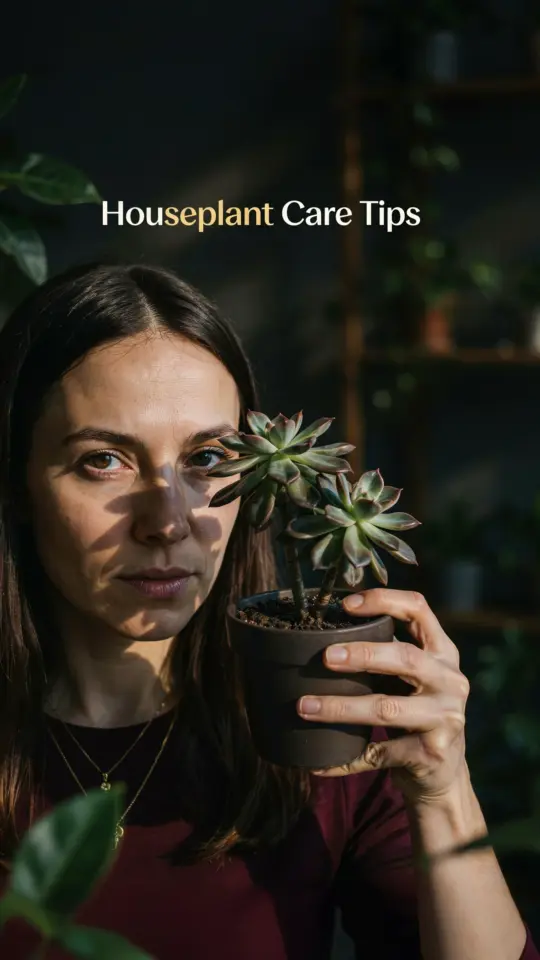
If you have a stretched out succulent sitting on your windowsill, you are not alone. That tall, pale, slightly sad looking plant is just trying to survive. It is reaching for more light, and the technical name for this growth pattern is etiolation. The good news is that with a few simple adjustments, you can bring your plant back to a compact, healthy shape. I have fixed several leggy succulents myself, and I promise it is easier than it looks.
Why Your Succulent Is Stretching Out
Succulents naturally grow low and tight to the ground in their native habitats. When they do not get enough sunlight, they stretch upward in search of brighter spots. This creates long stems with widely spaced leaves. The plant is essentially prioritizing survival over looks. You might see the stem become pale or even white, and the leaves may start pointing downward instead of forming a rosette. This is a clear sign that your indoor light levels are too low for that specific succulent species.
The most common culprits are north facing windows or spots far away from any window. Even a sunny looking room can be too dim for a succulent that needs direct sun for at least six hours a day. Understanding this cause is the first step to fixing the problem permanently.
How to Tell If Your Succulent Is Leggy
Not every tall succulent is unhealthy. Some species, like certain types of sedum or senecio, naturally trail or have longer stems. But a leggy succulent has a few telltale signs that make it easy to identify.
- The stem is visibly longer than usual for that species, with large gaps between leaves.
- The leaves are smaller, paler, or more spaced out than leaves lower on the stem.
- The plant leans heavily toward the light source, sometimes bending at an odd angle.
- New growth is thin and weak instead of plump and colorful.
If your succulent fits one or more of these descriptions, it is time to take action. The plant is not dying, but it will not thrive unless you intervene.
The Best Way to Fix a Leggy Succulent
Fixing a stretched out succulent involves two main steps: pruning the long stem and then providing better light. Pruning might feel scary if you have never done it, but succulents are incredibly forgiving. You can cut the top rosette off the stem and replant it. That severed top will grow new roots and become a fresh, compact plant. Meanwhile, the remaining stump can also produce baby succulents from the leaf nodes.
I recommend using clean, sharp scissors or pruning shears. Sterilize them with rubbing alcohol first to prevent any infection. Make your cut about half an inch below the lowest healthy leaves on the rosette. Let the cut end dry out for two to three days in a shady spot. This step, called callousing, prevents rot when you pot it up again.
Step by Step Succulent Pruning Guide
I will walk you through the exact process I use on my own leggy succulents. It works for echeverias, graptopetalums, pachyverias, and most rosette forming types.
First, remove the succulent from its pot and gently brush off excess soil so you can see the stem clearly. Identify where the stem becomes thin and stretched. You want to keep the healthiest top part, which is usually the tight rosette. Cut straight across with your sterilized blade. Set the top rosette aside on a paper towel to callous. Do not put it in soil right away.
Next, remove the lower leaves from the remaining stem. These leaves can be saved for propagation. Simply twist them off gently and set them on dry soil to grow new tiny plants. The bare stump should be left in the pot (or replanted) and watered sparingly. Within a few weeks, you will likely see new offsets sprouting from the nodes.
Once the top rosette has a calloused end, place it in a small pot with well draining succulent soil. Do not water for the first five to seven days so the cutting can begin to root. After that, water lightly and gradually move the pot to a brighter location.
Adjusting Light for Healthy Succulent Growth
Pruning only treats the symptom, not the cause. To prevent your succulent care routine from repeating the same problem, you must fix the lighting. Ideally, place your succulents in a south or west facing window where they get direct sunlight for several hours. If you do not have such a window, a grow light is a very effective alternative. I use a simple LED grow light on a timer for twelve hours a day during winter, and my plants stay compact and colorful.
Be careful not to scorch the plant by moving it from a dim spot directly into full afternoon sun. Acclimate it gradually over a week. Start with one hour of direct morning sun, then increase by an hour every few days. Your
#stretchedoutsucculent #leggysucculent #succulentcare #indoorplants #houseplanttips
Leave a Comment